Duration80 Minutes
Teaching Knowledge Test (TKT YL)
TKT Young Learners (YL) focuses on how children learn English and how teachers can support them in the primary classroom. It covers planning age-appropriate lessons, using stories, songs, and games to practise language, managing classroom activities, and assessing children’s progress.
FormatPaper Exam
Entry levelFoundation
What you need to know
Exam Information
Module Overview
TKT Young Learners is a specialist module for teachers of primary-school children. It explores how children’s development shapes the way they learn English and what that means for everyday teaching decisions. The syllabus covers four areas: understanding young learners, planning lessons, teaching and managing a class, and assessing children’s progress.
Understanding How Children Learn
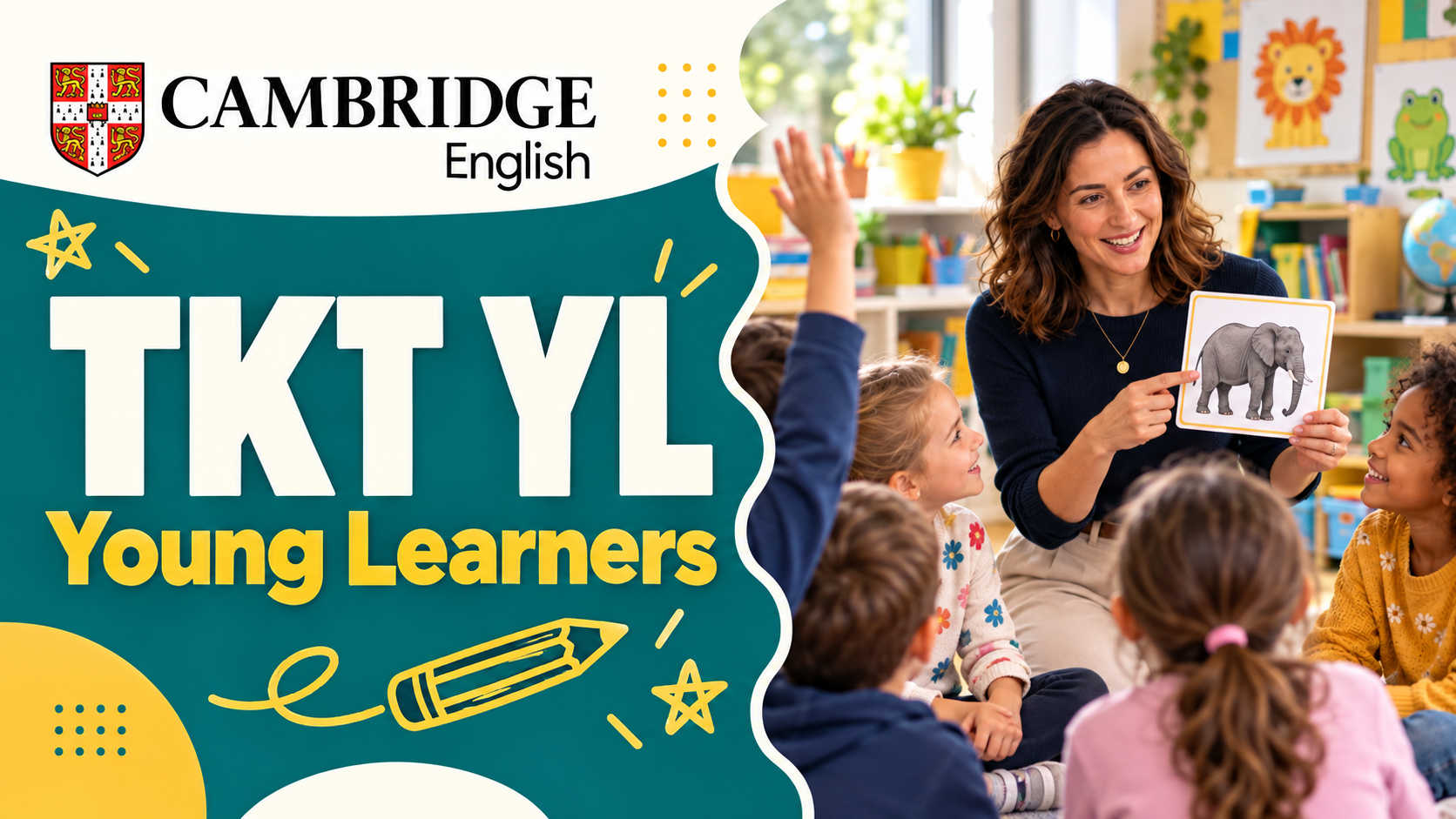
Candidates explore how children make sense of unfamiliar language, remember new words, and communicate with the English they already know. In a picture-book lesson, for example, a child might use an illustration to guess what trunk means, make a gesture to show understanding, and later use the word to describe an elephant. The teacher can build on each response as the child moves from understanding the word to using it independently.
Planning Lessons and Choosing Materials
Candidates consider how to set a learning aim and choose materials that suit children’s interests, language level, and stage of development. If the aim is to describe an animal, the teacher might begin with picture cards, introduce a phrase such as “It has …”, and finish with a guessing game. Children who need support can use a picture and a sentence starter, while those ready for a challenge can invent their own clues.
Teaching and Managing Activities
Candidates examine how teachers demonstrate tasks, keep children’s attention, and organise opportunities for everyone to participate. Before the guessing game, the teacher might hide an animal card and model a clue: “It has a long trunk.” Once the children understand the game, they can take turns giving clues in pairs. This gives each child a reason to speak and lets the teacher listen for who needs help.
Assessing Progress and Giving Feedback
The module also examines how teachers use evidence from ordinary classroom activities to decide what to teach next. A child who points to the elephant after hearing a clue has shown understanding. Giving a clue independently shows that the child can also use the language to communicate. A teacher who notices this difference can give specific feedback, offer another model, or adjust the next task to provide more speaking practice.
Test Format
Candidates answer 80 multiple-choice and matching questions in 80 minutes. The questions cover all four syllabus areas and assess knowledge of teaching English to young learners.