Duration80 Minutes
Teaching Knowledge Test (TKT CLIL)
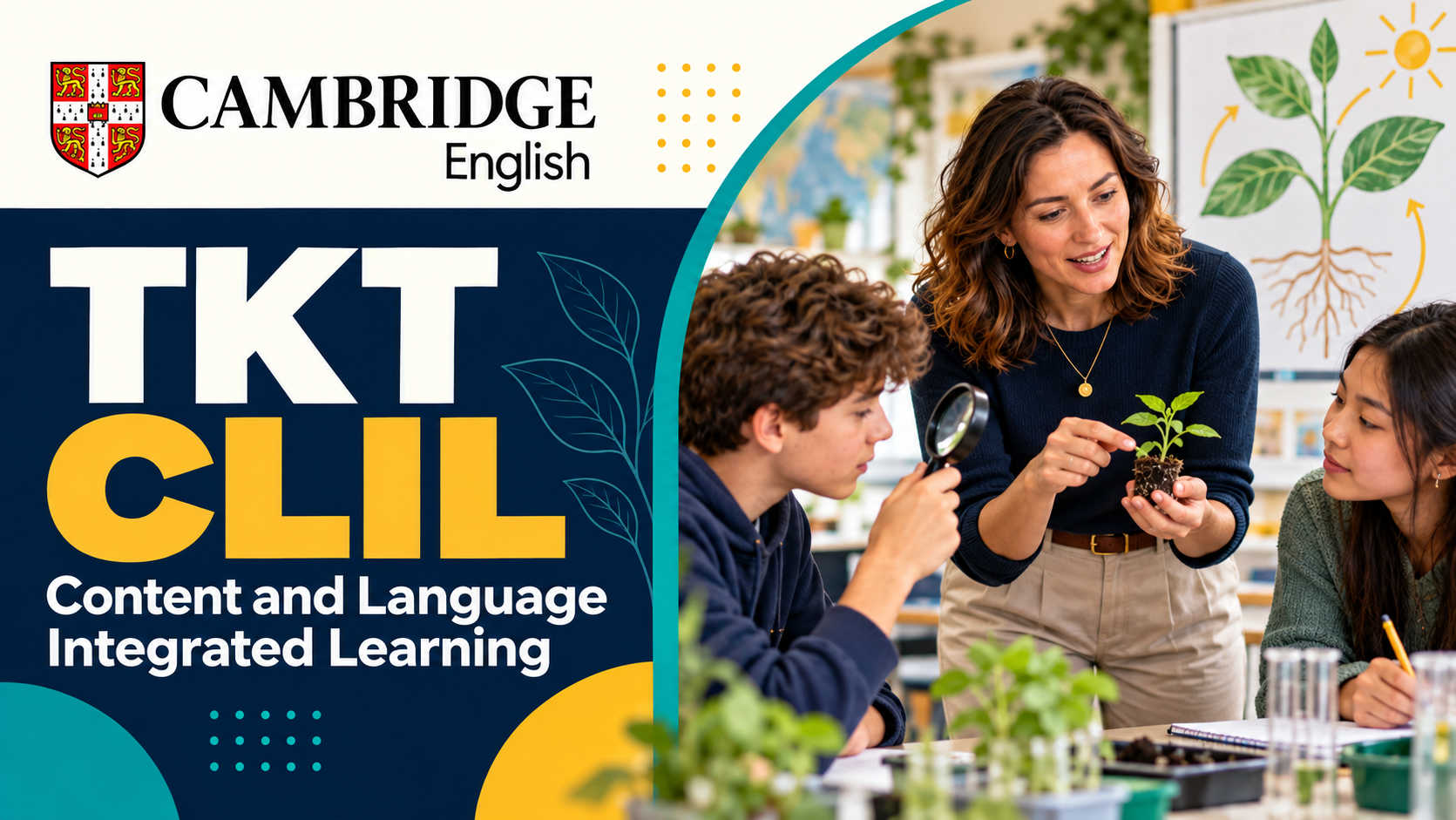
TKT CLIL (Content and Language Integrated Learning) is a specialist module for teachers who teach subjects such as science, geography, or history through an additional language. It explores how to plan lessons with both subject and language goals, support learners as they discuss new ideas, and assess their understanding. For example, in a science lesson on seedlings, learners might observe how roots grow while practising the language they need to describe and compare what they see.
FormatPaper Exam
Entry levelFoundation
What you need to know
Exam Information
Module Overview
TKT CLIL is a specialist module for subject teachers and English language teachers who teach subjects such as science, geography, or history through English. It explores how to help learners understand a subject while developing the language they need to investigate ideas, discuss evidence, and explain what they have learned. In the seedling lesson shown in the thumbnail, for example, learners study how a plant grows and use English to describe the changes they observe.
Understanding the Principles of CLIL
Candidates examine how subject knowledge, thinking skills, and communication work together. Different tasks place different demands on learners. Naming the roots, stem, and leaves of a seedling requires precise vocabulary. Comparing two seedlings also requires learners to notice differences, decide which features matter, and express a comparison such as “This seedling has a shorter stem but more leaves.” Recognising these demands helps a teacher anticipate where learners may need support.
Planning Lessons and Selecting Resources
Candidates explore how to set a subject aim alongside a language aim and choose materials that serve both. In a plant-growth investigation, the subject aim might be to identify changes over several days. The language aim might be to report those changes using measurements and comparisons. A dated observation chart gives learners a place to record evidence, while a labelled diagram and a model sentence help them turn their notes into a spoken or written account.
Teaching and Supporting Learners
The module covers scaffolding, the temporary support a teacher gives learners as they tackle an unfamiliar task. A teacher might model how to examine a seedling, think aloud while recording an observation, and invite pairs to repeat the process with another plant. Some learners may initially use a sentence starter such as “Between Monday and Friday, the stem grew from ___ to ___.” As they gain confidence, they can report their findings independently and choose which evidence to include.