
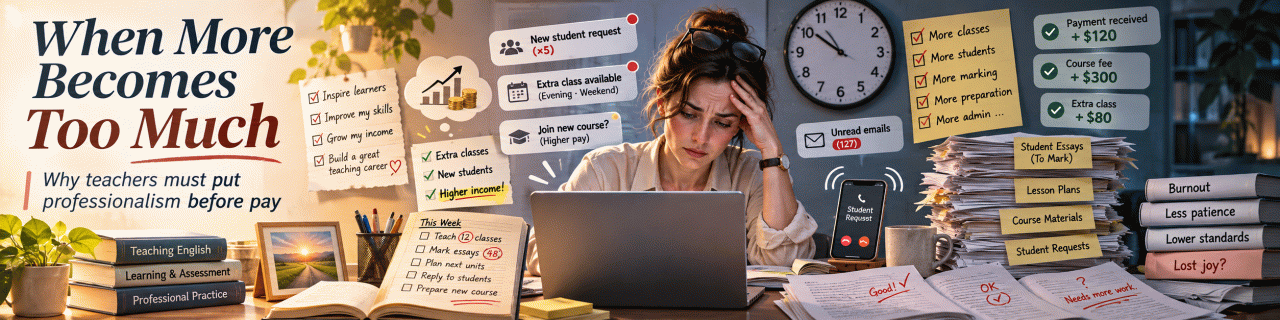
The allure is undeniable. More students mean more income. Additional courses, private lessons, online classes—why turn them down? For English language teachers struggling with modest salaries, the temptation to overbook is real. But what happens when ambition to earn more collides with the ability to deliver quality instruction? The result is a cautionary tale playing out in classrooms and online platforms worldwide.
The Seductive Beginning: When More Feels Like Success
It starts innocuously enough. A new student inquires. Another course becomes available. A school asks if you can take on an extra class. Each opportunity feels like validation and financial progress. Teachers who have watched colleagues struggle financially see these offers as security—a chance to finally earn what they deserve.
The problem is knowing when enough is enough.
An English teacher juggling four courses, 60+ students, and a handful of private lessons tells themselves they're being entrepreneurial. They're building their brand. They're taking control of their financial future. The initial months buzz with energy and optimism. The bank account grows. It feels triumphant.
Then reality sets in.
The Creeping Overwhelm: When Quality Becomes Collateral Damage
Preparation time disappears. Lessons that once took two hours to plan now get thirty minutes. Feedback on student essays transforms from thoughtful commentary to generic checkmarks. Office hours become impossible to schedule. Emails pile up unanswered. Zoom backgrounds blur as teachers deliver lessons from their cars between classes.
The teacher who once knew their students' names, learning styles, and personal goals now struggles to remember which class is which. Mistakes multiply—wrong assignments distributed, mixed-up grades, forgotten feedback. The passion that drew them to teaching—that spark of connection when a student has an "aha!" moment—becomes buried under administrative avalanches.
They're doing more work, earning more money, and ironically, enjoying teaching far less.
The Professional Reputation Unravels
Here's what the overwhelmed teacher doesn't immediately see: students notice everything. They notice when their essays aren't commented on substantively. They sense when their teacher is running on fumes. They recognize when professionalism has been sacrificed for expediency.
Word spreads quickly, especially in the connected world of education. Online reviews accumulate. Parents complain. Institutional relationships strain. The teacher who was once known for excellence becomes known for inconsistency. Colleagues who respected their work begin to distance themselves. Invitations to collaborate, present, or mentor dry up.
The irony is devastating: the pursuit of more money often results in earning less. Students leave. Schools look for more reliable instructors. The very financial security the teacher sought becomes jeopardized by their inability to maintain professional standards.
The Greater Loss: When Joy Dies
But perhaps the most tragic cost isn't financial—it's emotional.
Teaching has inherent rewards beyond salary: the satisfaction of watching students grow, the meaningful relationships built across cultural and linguistic boundaries, the creativity of designing engaging lessons, the intellectual stimulation of language itself. These intangible rewards often kept teachers motivated through the leaner years.
When overwhelm sets in, these rewards evaporate. Teachers stop enjoying their work because they're not actually doing their work anymore—they're merely surviving it. The job that once felt like a calling becomes a burden. The teacher who entered the profession to make a difference now counts the days until they can leave.
Burnout isn't a badge of honor. It's a warning sign that something fundamental has broken.
The Path Forward: Redefining Success
What would happen if teachers inverted their priority? What if professionalism came first, and sustainable income followed?
This doesn't mean rejecting opportunity or remaining underpaid. It means:
- Setting realistic caps on the number of students and courses you'll teach
- Protecting preparation time as non-negotiable
- Saying no to opportunities that compromise quality
- Investing in professional development that enhances rather than burdens your work
- Building a reputation so strong that students and institutions actively seek you out
- Defining your own version of success beyond mere numbers
The paradox is that teachers who maintain high professional standards often earn more and work less, because quality generates demand, referrals, and opportunities for higher-paying positions.
A Final Word
English language teaching is a profession worthy of respect and excellence. The teachers who sustained careers that brought them both financial stability and genuine joy weren't those who said yes to every opportunity. They were the ones who had the courage to say no—to protect their professional standards, their relationships with students, and their own wellbeing.
The money will follow. The joy might return. But only if professionalism comes first.
Comments
0No comments yet. Be the first to join the discussion.